


Help! My fridge is out of control
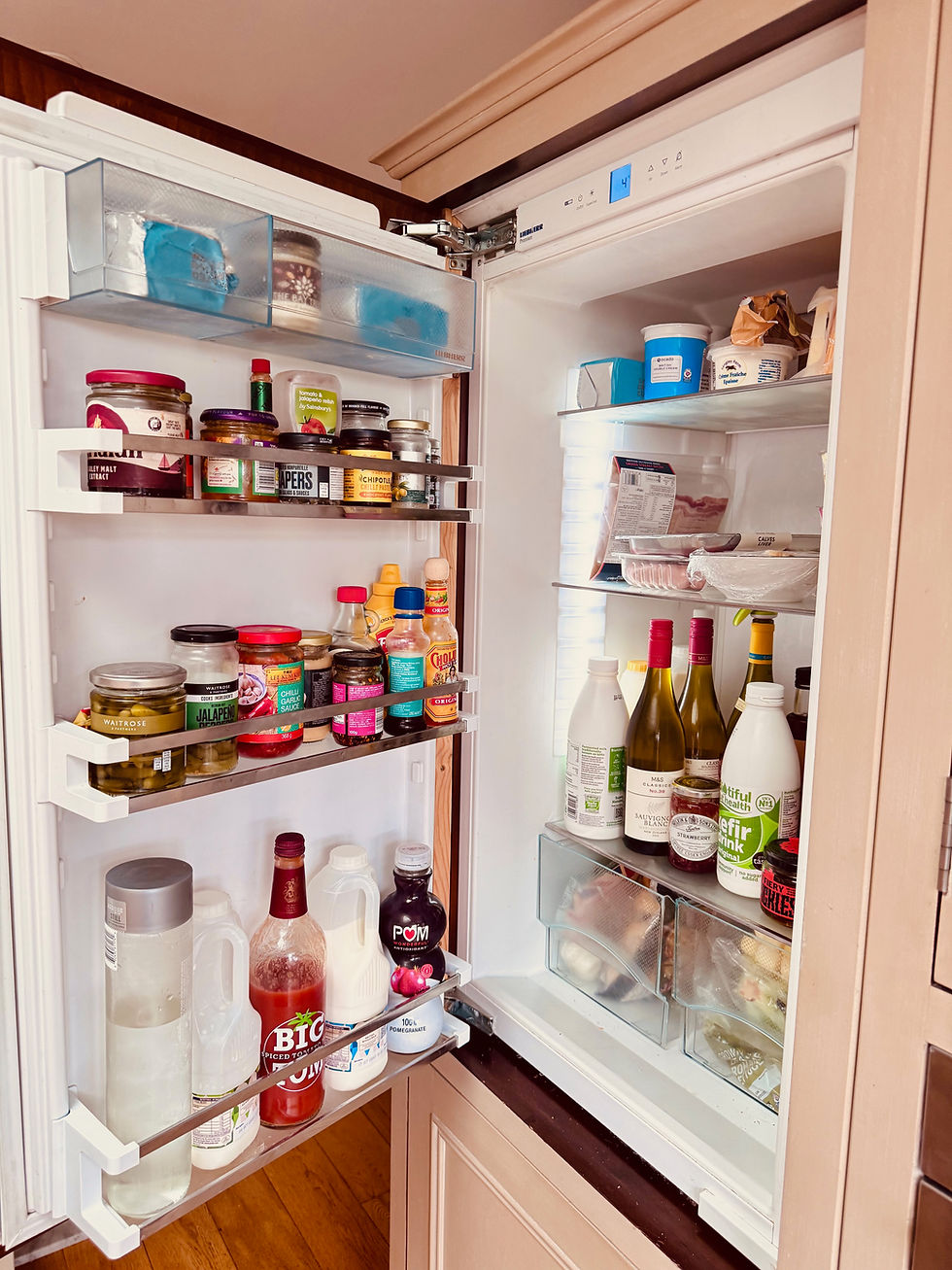
As part of my usual autumn reshuffle, I decided it was time to shake up my fridge. Over time one accumulates so many pots, jars and tubs that there’s no room left for fresh produce. Meanwhile, all those pots, jars and tubs inevitably pass their use-by dates, so when you finally decide you need to wake them up from their slumber, you throw them out instead.
The problem is that I love trying out new recipes, and very often that means shelling out for a new ingredient or two. Indeed, I have a suspicion that recipe writers deliberately use obscure ingredients nowadays to encourage us to spend more in the supermarket or delicatessen. Surely not…?
It’s easy to blame Ottolenghi, that great champion of new flavours and techniques; but we only need one of him. And he’s certainly not solely reponsible for the congested state of my fridge shelves, which contain at the last count thirty-eight – yikes, 38! – condiments from round the world.
This summer we’ve had a glut of tomatoes – grown on our roof deck – and my latest purchasing folly was a fermented bean paste of Korean origin called doenjang, required for a special tomato salad recipe in the New York Times. The smallest tub I could find in our Asian supermarket was 500g; the recipe used only 1 teaspoonful, so enough to make the recipe at least 100 times. (The ingredient list also specified perilla, a relative of mint with a weird aniseed flavour which I once – once was enough – grew in France, so I was happy to pass on that.)
The salad was the stuff of nightmares; furthermore, the paste tainted everything in the fridge – milk, eggs, butter – and was promptly removed to the dustbin.
After clearing out the fridge, I decided my storecupboard was due an inspection. I’m not obsessed with use-by and best-before dates, but they’re there for a purpose. At the same time I decided to check labels and discovered more items that should properly be kept in the fridge. More trips to the dustbin.
So what needs to be in the fridge, and what not?
Don’t shoot the messenger, but the official UK advice is to store eggs in a cool, dry place, ideally the fridge: they keep better. Some recipes give dire warnings that eggs must be brought to room temperature before using, but really? (I can’t think of a time – ever – when a chilled egg has sabotaged a dish or bake.)
Obviously mayonnaise should be refrigerated, but according to manufacturers’ advice, so should tomato ketchup and most other relishes. Exception: mustard.
I automatically put jams and marmalades in the fridge, to prevent them going mouldy. Also maple syrup – far too precious to waste.
If a label specifies (usually in microscopic print) that a product should be used within, say, three months of opening, I stick on a freezer label to remind me.
Once it’s lost its springy freshness, I refrigerate bread to prevent it going mouldy, and use it up quickly. Or freeze it, sliced, and toast straight from the freezer.
Potatoes are slower to sprout if they’re kept in the crisper drawer, but I don’t bother with garlic and onions.
Tomatoes, incidentally, never see the inside of my fridge. Refrigeration may prolong their life, but it does no favours to their flavour or texture.
World wars have been fought on this subject, so I’d love to know what you think.


I keep butter papers to use when I need to grease a tin for a cake or a pyrex for a bread and butter pudding. Very satisfying to have something ready at hand!